

Mr. Ho Duc Thang, a full-time National Assembly deputy serving on the National Assembly’s Committee on Culture and Social Affairs, presented a paper entitled “Data for Vietnamese AI – From a Data Ocean to a Responsible Market,” which attracted considerable attention by raising strategic issues concerning the future of AI in Vietnam.

Mr. Ho Duc Thang presented a paper titled: “Data for Vietnam’s AI – From a Data Ocean to a Responsible Market.”
The presentation highlighted several notable messages, including “AI can die of thirst in the middle of a data ocean,” “What is not digitized will be absent from machine memory,” and “If Vietnamese AI is to go far, Vietnamese data must move ahead.” The report argued that Vietnam’s greatest advantage in the AI race does not lie in competing to develop global-scale foundation models, but rather in leveraging Vietnam’s sovereign data—including Vietnamese-language data, legal, administrative, education, healthcare, agricultural, cultural, and local data tailored to Vietnamese use cases. At the same time, the report warned of risks related to data bias and AI learning from distorted data, emphasizing the need to build a responsible data market that ensures data is “accurate – clean – diverse – contextualized – and accountable.”
Ms. Vo Thi Trung Trinh, Director of the Ho Chi Minh City Digital Transformation Center, presented orientations for leveraging Data-as-a-Service (DaaS) as a new growth driver for Ho Chi Minh City’s digital economy during the 2026–2030 period.
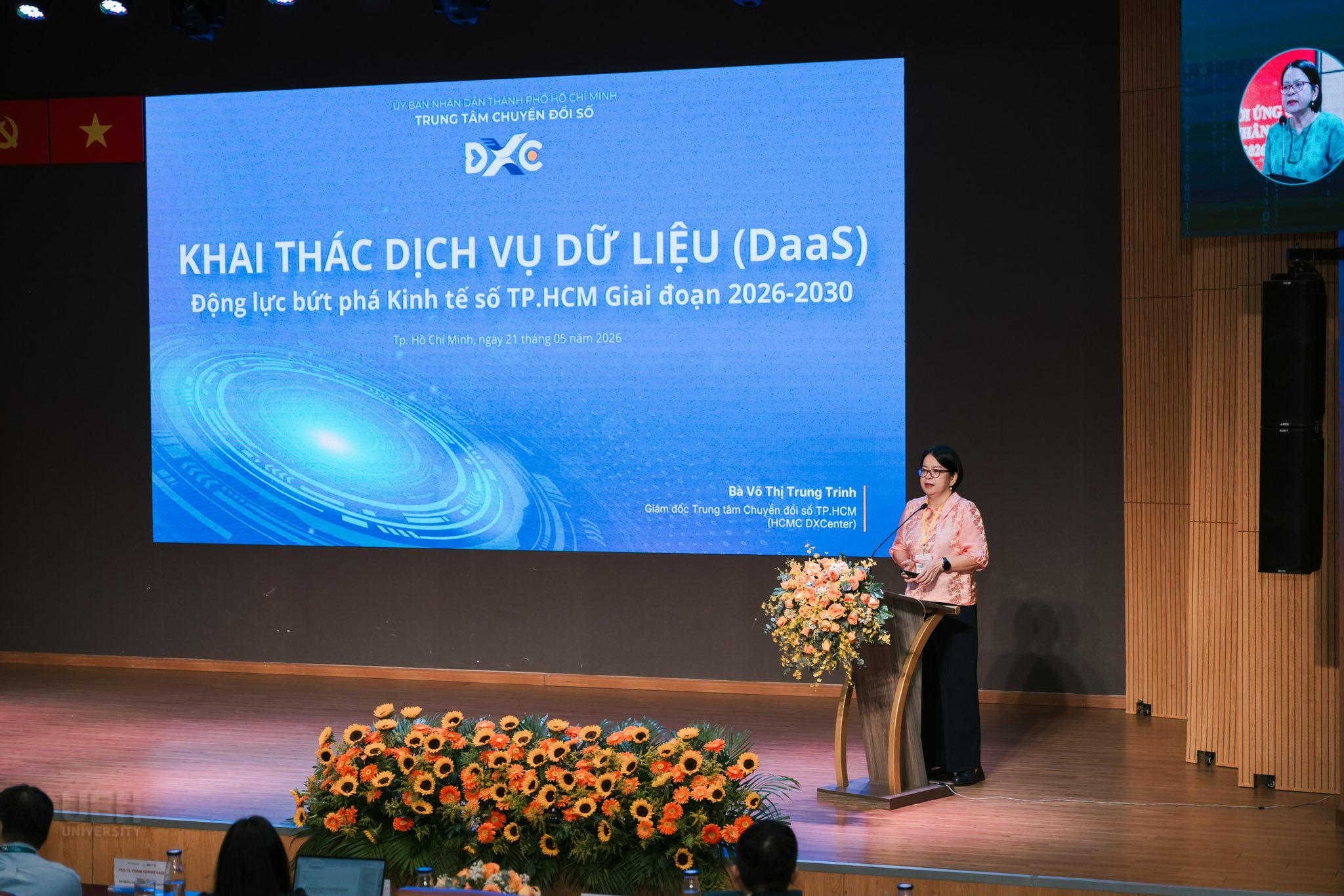
Ms. Vo Thi Trung Trinh outlined the strategy for leveraging Data-as-a-Service (DaaS) as a new growth driver for Ho Chi Minh City's digital economy.The presentation highlighted a shift in governance thinking from a data model in which information is “stored in information silos” toward a “data-as-a-service” model, where data is connected, shared, and leveraged to generate tangible economic value for businesses and society. Key topics included the strategy for developing a city data marketplace, a real-time data ecosystem, an international financial center associated with digital assets, and the goal of increasing the digital economy’s contribution to approximately 40% of the city’s GRDP by 2030.
During the plenary session, Ms. Tran Thi Tuyet, representing IPS, presented a paper entitled “Establishing Data Transactions in Vietnam: Policy Priorities and Recommendations.” The presentation focused on the current state of data commercialization in Vietnam and argued that data is becoming an increasingly important asset in the digital economy. According to the research team, data commercialization can currently be categorized into three levels: the sale of raw data, the sale of data analytics, and the provision of data-based services. However, Vietnam currently remains largely focused on utilizing data for public services and basic information authentication and lookup services.
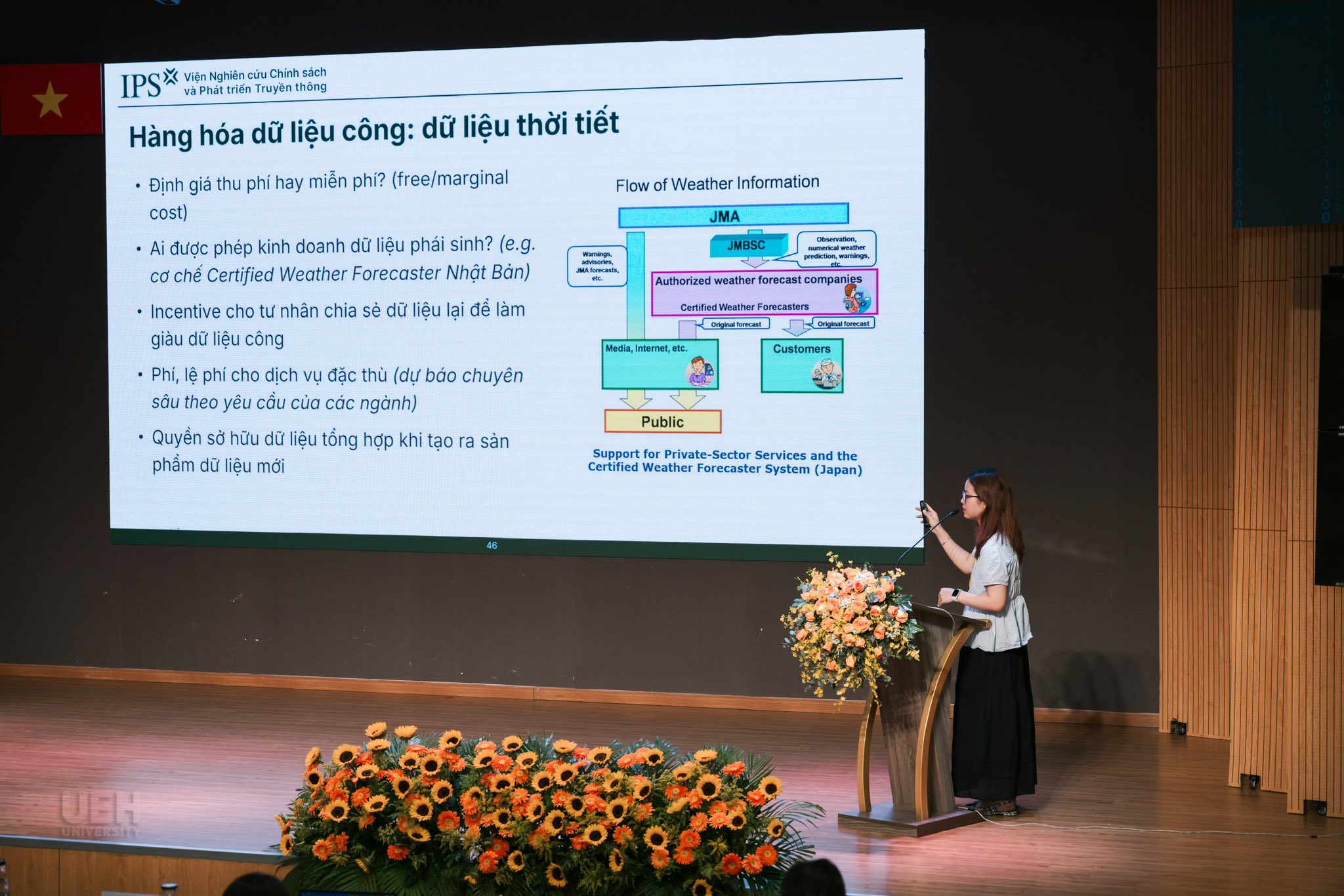
At the plenary session, the presentation titled "Establishing Data Transactions in Vietnam: Policy Priorities and Recommendations" was delivered byMs. Tran Thi Tuyet, representing IPS.Drawing on international experience, IPS highlighted Japan’s approach to opening meteorological and disaster warning data, enabling businesses to develop value-added products and services based on public data. The research team argued that Vietnam needs to shift from a “data utilization” model toward a “data market” model in order to attract private investment, promote competition, and improve data quality. Priority areas for development should include hydrometeorological data, land data, and real estate data, given their high demand and broad potential for application across various sectors.
In addition, IPS emphasized that Vietnam has established an important policy foundation through Resolution No. 57-NQ/TW and the National Data Strategy through 2030, with the goal of establishing data ownership and data commercialization rights and developing a data exchange. For the data market to operate effectively, the research team recommended completing the legal framework governing data transactions, taxation and fee mechanisms, technical standards, and privacy-enhancing technologies to ensure that the data market develops in a safe, transparent, and responsible manner.
In closing, the conference participants agreed that data is becoming a strategic resource for the digital economy, and that building a transparent and responsible data market will provide an important foundation for fostering innovation and supporting national development in the years ahead.
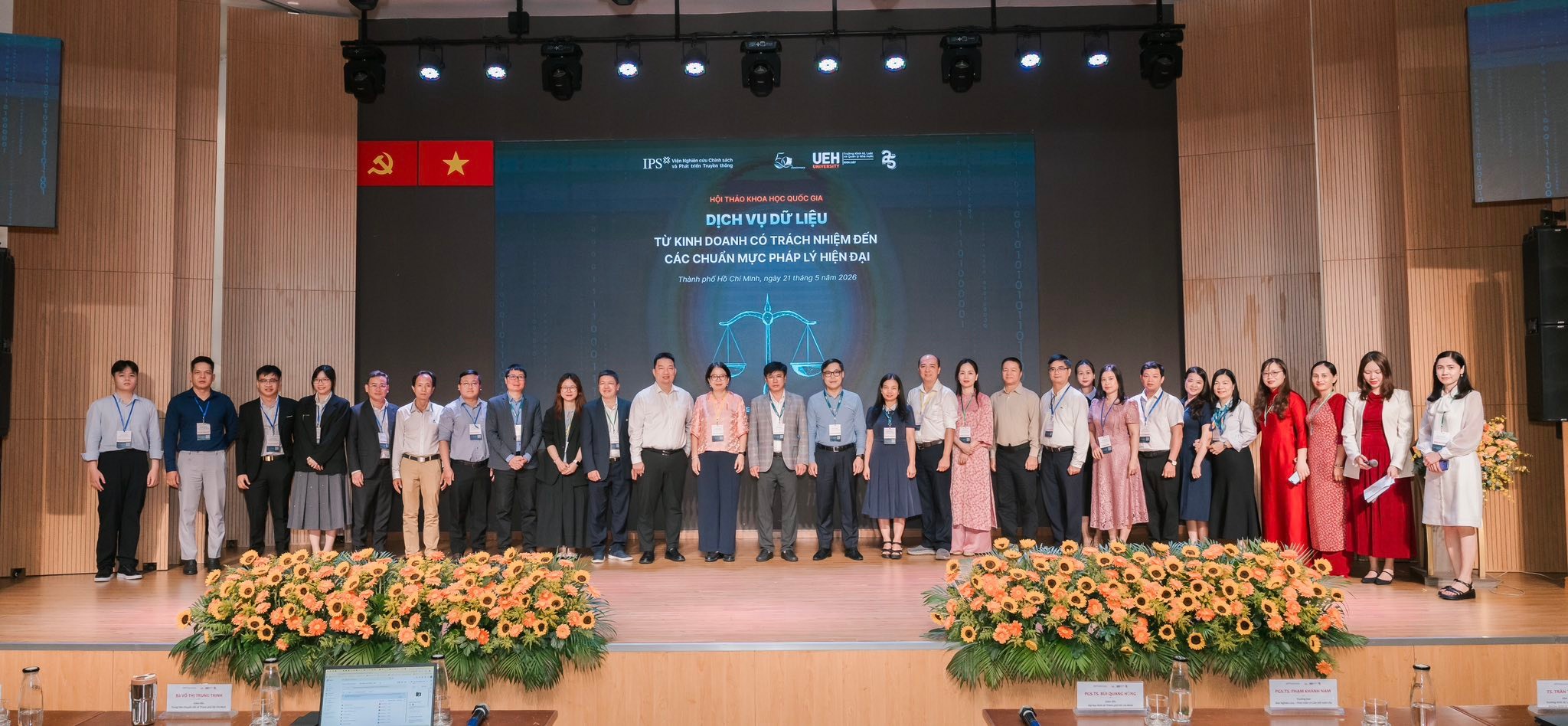
Speakers, experts, and delegates at the scientific conference“Data Services: From Responsible Business to International Standards”


.png "Data Regulatory Policy Landscape in Vietnam")